
Correlation between the point load index (Is(50)) and the
3.2 POINT LOAD TEST (PLT) The Point Load Test is also known as the Franklin test. The first reference is by Reichmuth, D. (1968) [10], who proposed obtaining the resistance to a point load and a determination of the unconfined compression strength via correlation, regardless of whether they are irregular, regular, or cylindrical rock controls [11].
 WhatsAppGet PriceGet A Quote
A guide to specifying the correct balustrade loading
The point load is usually applied to the most onerous point of the infill over a small area of 50 x 50mm. The performance of balustrades under impact should also be carefully considered and should be designed to withstand all incidental static and dynamic impact and also the inadvertent impact from electrically powered wheelchairs or scooters
WhatsAppGet PriceGet A Quote
No Touch Pinch Point Crush Point Load Control Hand Safety
The Hand Safety Tool Company recently received Underwriters Laboratories (UL) Verification for its ShoveIt® tool making it the first hands-off safety product of its kind to earn a marketing claim verification for its push / pull load rating.
WhatsAppGet PriceGet A Quote
Point Load Test | Geoengineer.org
Point Load test is an alternate method that can be used to adequately predict the uniaxial compressive strength of a rock material using a portable and simpler equipment. Schmidt Hammer Rebound test is also a technique used for this purpose but, it is admitted that its results are far more variable and affected by testing methods.
WhatsAppGet PriceGet A Quote
Calculate force required to crush a tube
The pipe is acting as a large rope/hook loop basically. It will see load on the underside of the top bend. As the top is formed obviously it will have ovality already. I''m fairly confident that the pipe in tension is more than strong enough so really was just wanting to figure out if it would crush at the top where the point load will be.
WhatsAppGet PriceGet A Quote
CRUSHPOINTS unsecured loads
identify those unsecured loads that can present a larger crush point hazard. Preventative Actions: • Control the load with the crane until fully rested in place. • If something becomes stuck or hung up, have the crane regain full weight and control, and then reposition the load.
WhatsAppGet PriceGet A Quote
Caught or Crush Injuries
E ach year, workers suffer approximately 125,000 caught or crush injuries that occur when body parts get caught between two objects or entangled with machinery. These hazards are also referred to as “pinch points.” The physical forces applied to a body part caught in a pinch point can vary and cause injuries ranging from bruises, cuts, and scalping to mangled and amputated body parts, and
WhatsAppGet PriceGet A Quote
Cone Crusher Parts
Cone Crusher MANTLE. The Mantalloy head mantle of this cone crusher is a replaceable wearing surface. It is made of alloyed manganese steel, and is held in place with a self-tightening head nut. On the 51-in. Hydrocone crushers and larger, the bottom portion of the mantle is ground to gauge to fit the head center, and the top portion is zinced.
WhatsAppGet PriceGet A Quote
Causes and controls for preventing pinch point injuries
A Pinch Point is produced when 2 objects come together and there is a possibility that a person could be caught or injured when coming in contact with that area. Pinch points commonly impact fingers / hands, but can impact any area of the body. The injury resulting from a pinch point could be as minor as a blister or as severe as amputation or
WhatsAppGet PriceGet A Quote-
Assessment
By participating in this voluntary assessment (in which you may opt out at any point), you are agreeing to the following statements: I understand that crushbymn.com is an initiative formed and run by private companies working collectively to provide more testing to essential workers around the state. If my test result is positive for COVID-19
WhatsAppGet PriceGet A Quote 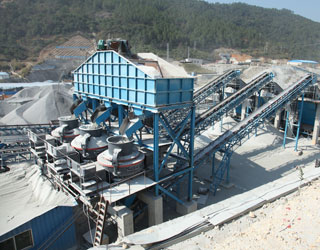
Cone Crusher Parts
Cone Crusher MANTLE. The Mantalloy head mantle of this cone crusher is a replaceable wearing surface. It is made of alloyed manganese steel, and is held in place with a self-tightening head nut. On the 51-in. Hydrocone crushers and larger, the bottom portion of the mantle is ground to gauge to fit the head center, and the top portion is zinced.
WhatsAppGet PriceGet A Quote
Point loads on CFS steel studs
Point loads on CFS steel studs canadiancastor (Structural) (OP) 11 Nov 21 01:19. guessing the steel stud has a slip-track at the head to allow slab deflection over not to crush the steel studs. but if the cladding is hung from the slab, and also anchored back to the wall, wont the cladding and the steel studs be pinching eachother if there
WhatsAppGet PriceGet A Quote-
How to determine the max load capcity of a steel square
The next worst situation will be when a point load is applied to only one upper edge, near the middle of the tube. A dent in the edge will form. The same sort of failure as case 1 will then occur, as the loaded sidewall bends along its midline and so reduces the top to bottom separation. 3. The third situation will be when the load is shared by
WhatsAppGet PriceGet A Quote 
Tranferral of Point Loads
Assuming point loads are distributed over the necessary number of studs is certainly wrong but engineering-wise an unsafe number. If a beam (not a joist) is transferring a load to a point on a wall, One might expect that the top plates would not support the load, but that some type of header could safely transfer the load to the entire wall.
WhatsAppGet PriceGet A Quote
Wizards crush Grizzlies!! Improve to 6-3
Washington’s offense was also clicking at a high level. After two terrible games from beyond the arc, the Wizards would go on to shoot 40% from three against the Grizzlies. As a team, the Wizards also dished out 34 assists to Memphis’ 19 assists. With a 115-87 win over Memphis, Washington will improve to 6-3 on the season and 4-1 at home.
WhatsAppGet PriceGet A Quote
RFG Advisory Kicks Off October with Its First Annual Crush
Crush It For Charity was born out of their insatiable desire to create lasting value for our communities.” Every day, 11.3 million kids and teens leave school with no place to go.
WhatsAppGet PriceGet A Quote
Loads on Buried Pipes
This equation is presented below where P is the point surcharge load, H is the depth to the pipe crown and r is the horizontal distance from the load to the pipe centre. The CivilWeb Buried Pipe Design spreadsheet includes a calculation tool for estimating the vertical pressure acting on a pipe from up to 16 concentrated point loads on the surface.
WhatsAppGet PriceGet A Quote
MOORING AND BERTHING LOAD CALCULATION
In order to design the wharf System, berthing loads, mooring loads from TUG/BARGE shall be assessed first. The berthing loads for Berthing Condition will be assessed based on the berthing energy calculated as per BS 6349-Part 4: Code of practice for design of fendering and mooring systems.
WhatsAppGet PriceGet A Quote
Correlation between the point load index (Is(50)) and the
3.2 POINT LOAD TEST (PLT) The Point Load Test is also known as the Franklin test. The first reference is by Reichmuth, D. (1968) [10], who proposed obtaining the resistance to a point load and a determination of the unconfined compression strength via correlation, regardless of whether they are irregular, regular, or cylindrical rock controls [11].
WhatsAppGet PriceGet A Quote-
Correlation between the point load index (Is(50)) and the
3.2 POINT LOAD TEST (PLT) The Point Load Test is also known as the Franklin test. The first reference is by Reichmuth, D. (1968) [10], who proposed obtaining the resistance to a point load and a determination of the unconfined compression strength via correlation, regardless of whether they are irregular, regular, or cylindrical rock controls [11].
WhatsAppGet PriceGet A Quote 
Lezhin Comics
Point Expiration Date: Points will be available for 30 days after receiving them. Cancel Purchase Purchase Coins. Loading comic. Failed to load comic
WhatsAppGet PriceGet A Quote
Point Load Test | Geoengineer.org
Point Load test is an alternate method that can be used to adequately predict the uniaxial compressive strength of a rock material using a portable and simpler equipment. Schmidt Hammer Rebound test is also a technique used for this purpose but, it is admitted that its results are far more variable and affected by testing methods.
WhatsAppGet PriceGet A Quote
CRUSHPOINTS unsecured loads
identify those unsecured loads that can present a larger crush point hazard. Preventative Actions: • Control the load with the crane until fully rested in place. • If something becomes stuck or hung up, have the crane regain full weight and control, and then reposition the load.
WhatsAppGet PriceGet A Quote-
Causes and controls for preventing pinch point injuries
A Pinch Point is produced when 2 objects come together and there is a possibility that a person could be caught or injured when coming in contact with that area. Pinch points commonly impact fingers / hands, but can impact any area of the body. The injury resulting from a pinch point could be as minor as a blister or as severe as amputation or
WhatsAppGet PriceGet A Quote 
Uniaxial compressive strength vs. point-load strength
Secondly, point load test was performed on the numerical models with dimension of 15 cm×50 cm. The rectangular models were tested by point load test under presence of confining pressure. The rate
WhatsAppGet PriceGet A Quote
BEAM DESIGN FORMULAS WITH SHEAR AND MOMENT
AMERICAN WOOD COUNCIL w R V V 2 2 Shear M max Moment x 7-36 A ab c x R 1 R 2 V 1 V 2 Shear a + — R 1 w M max Moment wb 7-36 B Figure 1 Simple Beam–Uniformly Distributed Load
WhatsAppGet PriceGet A Quote
PointClickCare
Available Login Names: Loading... Loading...
WhatsAppGet PriceGet A Quote
A guide to specifying the correct balustrade loading
The point load is usually applied to the most onerous point of the infill over a small area of 50 x 50mm. The performance of balustrades under impact should also be carefully considered and should be designed to withstand all incidental static and dynamic impact and also the inadvertent impact from electrically powered wheelchairs or scooters
WhatsAppGet PriceGet A Quote
Caught or Crush Injuries
E ach year, workers suffer approximately 125,000 caught or crush injuries that occur when body parts get caught between two objects or entangled with machinery. These hazards are also referred to as “pinch points.” The physical forces applied to a body part caught in a pinch point can vary and cause injuries ranging from bruises, cuts, and scalping to mangled and amputated body parts, and
WhatsAppGet PriceGet A Quote
Tool Box Talk: Pinch Points
Tool Box Talk: Pinch Points. Crush injuries can occur when body parts get caught between two objects or entangled with machinery. These hazards are also referred to as “pinch points.”. The physical forces applied to a body part caught in a pinch point can vary and cause injuries ranging from bruises, cuts, amputated body parts, and even death.
WhatsAppGet PriceGet A Quote


 Mecca 500TPH Granite Crushing Plant